Factual review: 12 October 2026. Scope: textile apparel intended for the EU market.
A Digital Product Passport (DPP) project brings together product information, digital services and physical labels. For an apparel brand, the practical question is how to connect those parts while keeping responsibility for each clear.
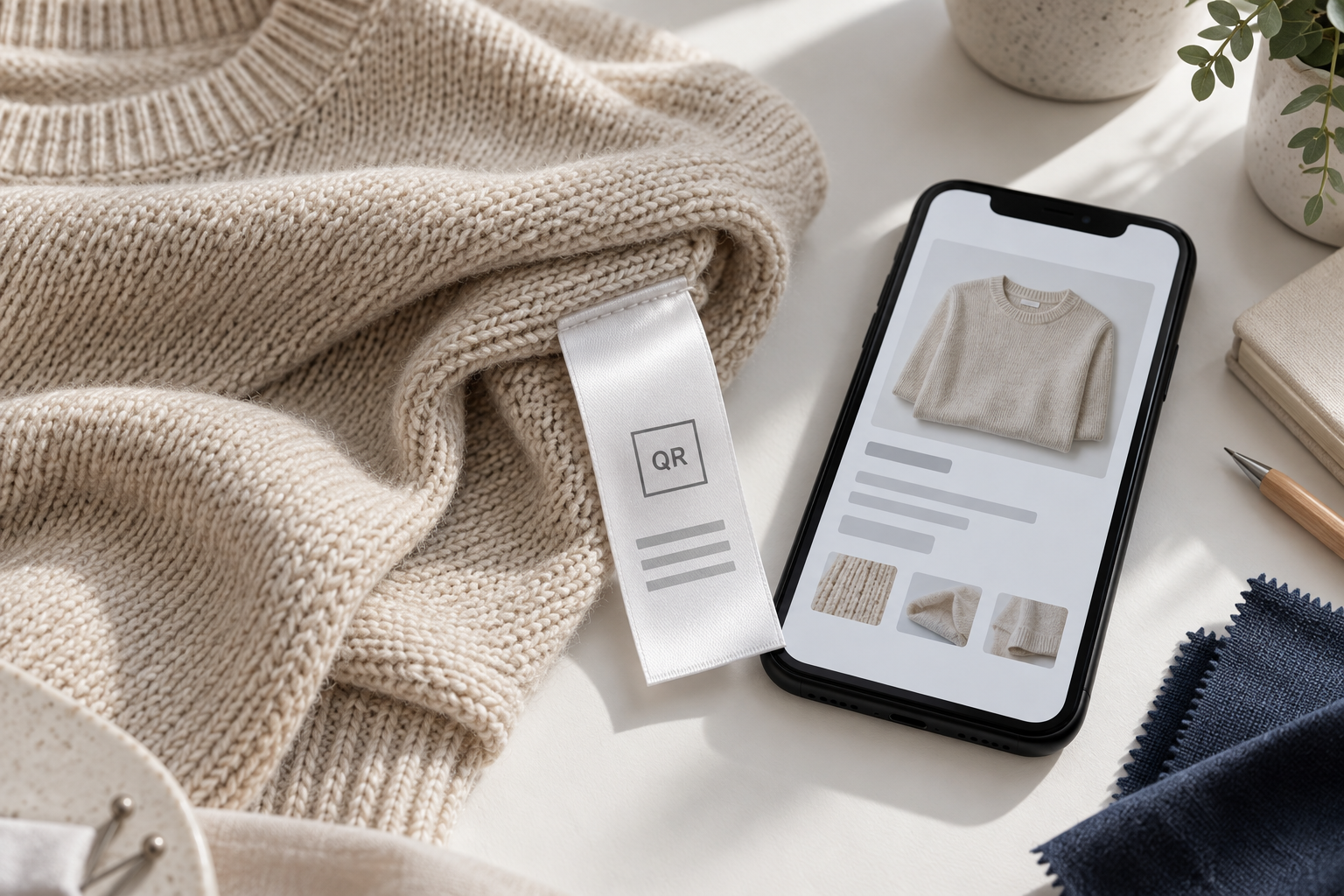
A care label carrying a QR code can be part of that connection. The European Commission describes textile-specific DPP requirements as forthcoming, with an indicative Q4 2027 target for adopting the relevant delegated act. That is an adoption target, not a confirmed date when every garment must have a passport. Commission textile DPP implementation information.
This guide explains the label's role, the current policy position and a preparation sequence for sustainability managers working with compliance and production colleagues. It also applies to planning by UK-based brands supplying the EU; it does not assess domestic UK requirements.
What does a DPP-connected care label do?
The Commission describes a DPP as a digital container for product information, introduced progressively across product groups. Its purpose includes making relevant information accessible to businesses, consumers, repairers, recyclers and authorities. The information depends on the product and applicable rules. Commission DPP overview.
For a brand evaluating “DPP-compliant labels”, separate three questions: what information sits behind the passport, how someone accesses it, and how the access mechanism is incorporated into a garment label. A supplier's answer about printing addresses only part of that assessment.
| Part | Role in an illustrative QR-linked workflow | Question to ask |
|---|---|---|
| Passport information and digital service | Present and maintain the relevant product record. | Who approves the information and manages the service? |
| Link and QR code | Connect the physical item to its intended digital destination. | Which product does this supplied link identify? |
| Physical garment label | Carry the printed code alongside the agreed label content. | Who approves the artwork and physical sample? |
The table describes a planning example. It is not a final mandatory textile specification. The Commission-hosted DPP FAQs explain that product-specific rules will determine the data carrier; they do not establish that any QR code on any care label will be sufficient. DPP FAQs, question 26.
What is the current EU textile position?
The Ecodesign for Sustainable Products Regulation (ESPR) provides the framework. The Commission records its entry into force as 18 July 2024. Keep that event separate from the development and application of product-specific requirements. Commission ESPR overview.
Three developments matter when reading a supplier proposal:
- The framework exists. A reference to ESPR should lead to a discussion of the relevant product rules and the evidence supporting a particular claim.
- Shared infrastructure has progressed. The Commission announced the DPP Registry and its testing environment on 20 July 2026. Its standards page also lists the July 2026 decision publishing DPP standards references. Registry announcement, official standards listing.
- Textile-specific details remain under development in the Commission's current account. Its textile page says the future delegated act will define the requirements. Its list of possible information is conditional, so it should not be copied into a supplier brief as a settled mandatory dataset. Commission textile DPP information.
For planning, record adoption, entry into force and application as separate milestones. Ask which source supports each proposed deadline. Recheck the textile-specific rules before committing to a production specification; an infrastructure launch does not settle that specification.
Who should own each part of the project?
The Commission's textile guidance identifies operators placing products on the EU market or putting them into service as the principal future addressees, while describing other supply-chain roles. The appropriate legal role depends on the circumstances. Commission explanation of who is subject to DPP requirements.
For project management, make the following allocation explicit. These are recommended working arrangements, rather than a complete statement of statutory duties.
Brand team: product information and approval
Appoint someone to coordinate the project across sustainability, compliance and production. Assign approval of composition, care information and other proposed content to colleagues who can support it with the appropriate evidence. Keep unresolved information visible instead of filling gaps with assumptions.
Agree how a changed material, supplier or product specification will trigger review. A passport project is a useful opportunity to resolve conflicting records before they reach artwork.
External DPP provider: digital service and supplied link
Ask the provider to explain the product identity behind each link, who can update the record and how continued access will be managed. Request a clear account of its scope, the applicable standards it implements and any evidence needed from the brand. Discuss registration responsibilities separately from label production.
Record the answers in the project brief. A demonstration screen is useful for understanding a service, but the purchasing decision also needs an agreed description of responsibilities and deliverables.
Label producer: artwork and physical output
Give the label producer the approved destination and content, then agree the artwork and sample approval process. Identify who checks that the printed code leads to the intended product record.
Keep physical-label compliance review separate within the project. Before moving information online, check the rules for that information and destination market. Existing reading on EU clothing labelling requirements and EU care instructions and symbols can help frame that review.
A practical preparation sequence
Start with a small, clearly defined product group. The following sequence is a recommended pilot approach, not a prescribed DPP compliance procedure.
Illustrative workflow — responsibilities agreed by the brand
- Brand approves source information
- External DPP provider supplies product link
- Label team prepares artwork
- Brand reviews destination, artwork and sample
- Agreed label production
- Named owners manage later changes
1. Define the pilot. Select a product group, sales market and intended use of the connected information. Write down the question the pilot should answer, such as whether the team can maintain a reliable association between approved product information and the label sent to a factory.
2. Review source information. Identify where each proposed item of information comes from, who approves it and which evidence supports it. Avoid treating a general DPP data template as the final textile requirement.
3. Agree product association. Have the brand and external provider explain exactly which product the supplied link represents. Keep that association visible during label approval. Do not assume that an internal stock reference, by itself, answers every identification question.
4. Review the connected result. Check the destination alongside the artwork and a physical sample. Agree suitable sample checks with the parties responsible for production. Detailed dimensions, construction and acceptance criteria belong in the production specification.
5. Record decisions and changes. Retain the approved information, link association, artwork version and named approver together. Decide who will investigate a broken destination or inconsistent information, and who can authorise a correction.
For example, imagine a shirt whose approved label content has been updated after a material change, while its supplied digital destination still shows an earlier specification. A useful pilot check compares those records and returns the discrepancy to the information owner. Generating a new QR image would not, by itself, correct the underlying record. This is a hypothetical workflow example, not a labelAccord validation feature.
Where labelAccord fits
labelAccord renders QR codes from links generated by external DPP platforms and incorporates them into garment-label layouts. In the layout + production tier, it also provides high-resolution printing of those codes on labels. Customisation is subject to readability, supported output and agreed production specifications.
Product information can be imported in bulk from Excel or CSV files exported from enterprise resource planning (ERP) or product lifecycle management (PLM) systems. API access is also available for connecting with an external DPP platform.
Once the brand and its DPP provider have agreed the supplied link and responsibilities, discuss that link, the required label content and the proposed production workflow with labelAccord.
Frequently asked questions
Does a QR code prove DPP compliance?
No. A working scan demonstrates access to a destination. Assessing a DPP also involves the information, service and applicable requirements behind it. Treat the scan as one project check, not a complete compliance assessment.
Does labelAccord host the passport?
The approved labelAccord workflow uses links supplied by an external DPP platform. Passport hosting is outside the approved capability described here.
Source scope: this overview reports the Commission's current explanations and gives preparation recommendations. It does not provide a final textile DPP specification or a complete legal or technical conformity assessment.