Factual review: 12 October 2026.
A useful DPP label-printing brief gives the supplier more than a QR image. It connects an approved external Digital Product Passport (DPP) link to the right garments, label content, construction, quantities and release decision.
For EU and UK apparel brands preparing products for the EU market, this is practical production planning. The European Commission describes textile-specific DPP requirements as future measures. A printing specification is therefore not proof of DPP compliance. The checklist below sets out recommended purchasing controls, rather than a statutory DPP dataset.
Prepare the external link and product mapping
Ask the external DPP provider for the approved destination links and a record showing which products each link represents. Include the internal references your brand and factory use, such as style, colour, size and production batch where relevant. These are planning references; an internal stock code is not presented here as a regulatory identifier.
Make the intended association explicit. If different variants need different destinations, give the supplier a row for each association rather than expecting it to infer the mapping from filenames. Ask the supplier to confirm how that mapping will be preserved through printing, packing and factory receipt.
Before approval, compare the destination information with the product record. Opening a working webpage does not establish that it describes the correct garment. Resolve missing links, unexpected access restrictions and incorrect destinations with the responsible provider before releasing the job.
Supply approved content, languages and construction
Send the text and symbol artwork the brand has approved, together with target markets, language versions and the person authorised to approve corrections. Include the references behind fibre composition and garment-care decisions. The supplier should know which content is final and which questions remain open.
For EU-specific background, use the guides to fibre composition and animal-origin disclosures and care instructions and symbols when preparing the content brief.
Describe the intended label material, finished dimensions, printed sides or pages, fold, attachment position and sewing allowance. Include a drawing showing what will be visible after attachment. These are requirements to discuss with the producer, not assumptions about every supplier's supported formats.
Agree proof and sample approval
Separate artwork approval from physical-sample acceptance. For the artwork proof, record the version, approved wording, languages, link mapping and named approver. Identify any change that requires a revised proof.
For samples, agree what the producer will supply, using which material and printing process, and how the label will be attached for assessment. Define who will perform the agreed checks, which conditions or treatments apply and what constitutes acceptance. Any testing service and its cost should be confirmed explicitly with the party providing it.
Use the sample review to check readable text, access to the code in the attached label and the intended destination. If performance after care treatment matters to the job, agree the method and acceptance criteria in advance. A successful phone scan alone should not be treated as approval of every aspect of the label.
Retain the approved proof, sample reference, recorded results, unresolved exceptions and release decision together. Make clear whether approval covers a trial quantity or the full order.
Confirm quantities and delivery
Break the order down by artwork version, product mapping, language set and receiving factory where these differ. Specify the required quantity for each line, including any separately agreed sample or spare allowance. Agree how shortages, excess quantities or rejected labels will be handled.
Distinguish the date needed at the garment factory from the supplier's proposed dispatch date. Confirm the delivery address, recipient, packing identification and transport arrangements. Ask for written confirmation of pricing, minimum quantities if applicable, lead time and what the quotation includes; do not assume that artwork, samples, testing and delivery are included together.
For split shipments, state which order lines go to each destination so that the receiving team can match the labels to its production instructions.
Set responsibility for later changes
Name contacts for destination content, product mapping, artwork and order changes. Agree who can approve a change and who tells the supplier and factory to stop using a superseded version.
Before changing an address or redirect behind an already printed code, ask the external provider to confirm the effect on existing labels and product associations. If printed wording or mapping is wrong, review the affected stock and agree the corrective action; do not assume that editing an online page corrects the physical label.
Record the change, affected quantities, replacement version and renewed approval. Include a continuity plan for the link if the provider relationship changes.
Production-brief checklist
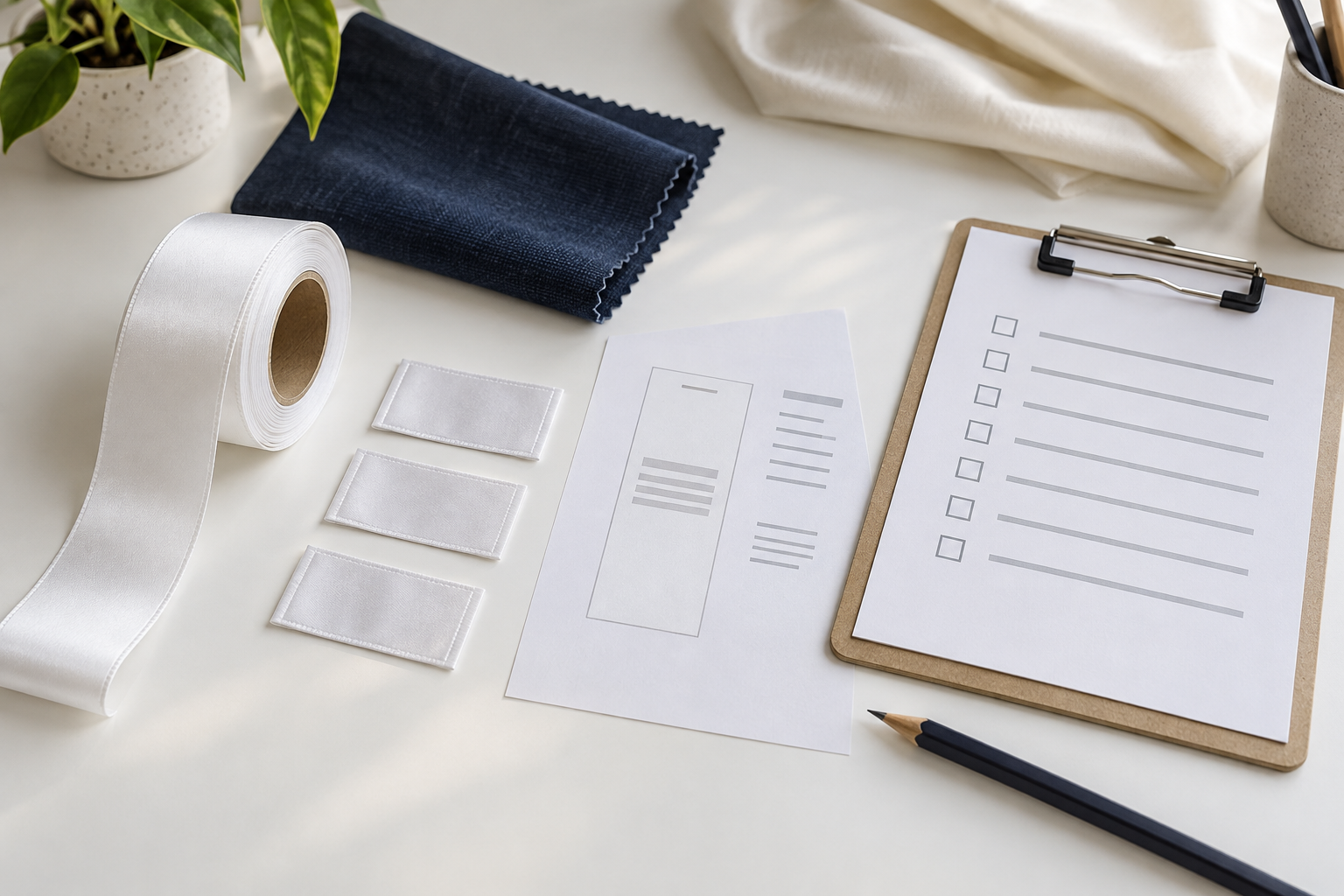
Copy this blank checklist into the job brief. It is a buyer planning tool, not a labelAccord import template. Record unresolved items before authorising production.
| Check | Supply or agree | Reference / owner / status |
|---|---|---|
| Product and market | Product references, target markets and approved language sets | __________ |
| Links and mapping | Approved external URLs, product associations and destination owner | __________ |
| Content and construction | Approved text/symbol files, material, dimensions, fold and attachment drawing | __________ |
| Artwork proof | Version, corrections, approver and approval date | __________ |
| Physical sample | Sample reference, agreed checks, tester, criteria and results | __________ |
| Quantities | Quantity by order line and agreed treatment of spares or rejects | __________ |
| Delivery | Factory/address, receipt date, dispatch plan and packing identification | __________ |
| Changes and release | Change contacts, outstanding exceptions and signed release record | __________ |
Discuss the job with labelAccord
labelAccord renders links generated by external DPP platforms as QR codes in garment-label layouts. The layout + production tier includes high-resolution printing; its vendor workflow also supports quantity and delivery-address confirmation.
Book a labelAccord demonstration to discuss your supplied DPP link, layout and production requirements, using the completed checklist as the starting brief.